

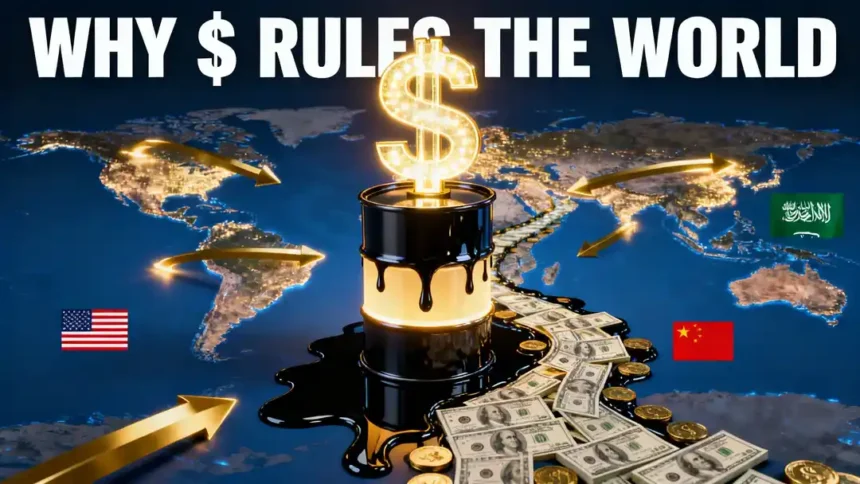
The Petrodollar system has shaped global finance for over 50 years. It plays a central role in geopolitics and economic stability. This system explains the continued dominance of the US dollar in international trade.
The Importance of Oil in the Global Economy
Oil is the lifeblood of the modern economy. It powers transportation systems like cars, ships, and airplanes.
It is also essential for manufacturing plastics, chemicals, and fertilizers. Many countries depend on oil for electricity generation.
Because oil demand is constant, a massive global market exists. This market influences the importance of the currency used in trade.
Origins of US Dollar Dominance
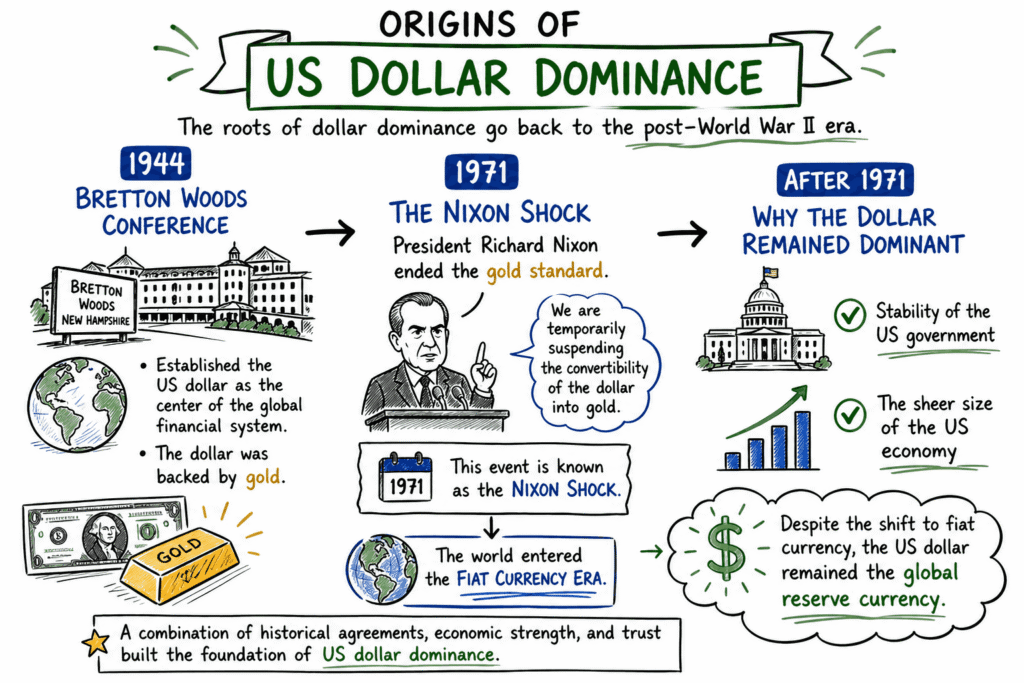
The roots of dollar dominance go back to the Bretton Woods Conference in 1944.
This agreement made the US dollar the center of the global financial system. The dollar was backed by gold at that time.
In 1971, Richard Nixon ended the gold standard. This event is known as the Nixon Shock.
After this shift, the world entered the fiat currency era. Despite this change, the dollar remained dominant.
The stability of the US government supported this dominance. The size of the US economy also played a major role.
The Birth of the Petrodollar System
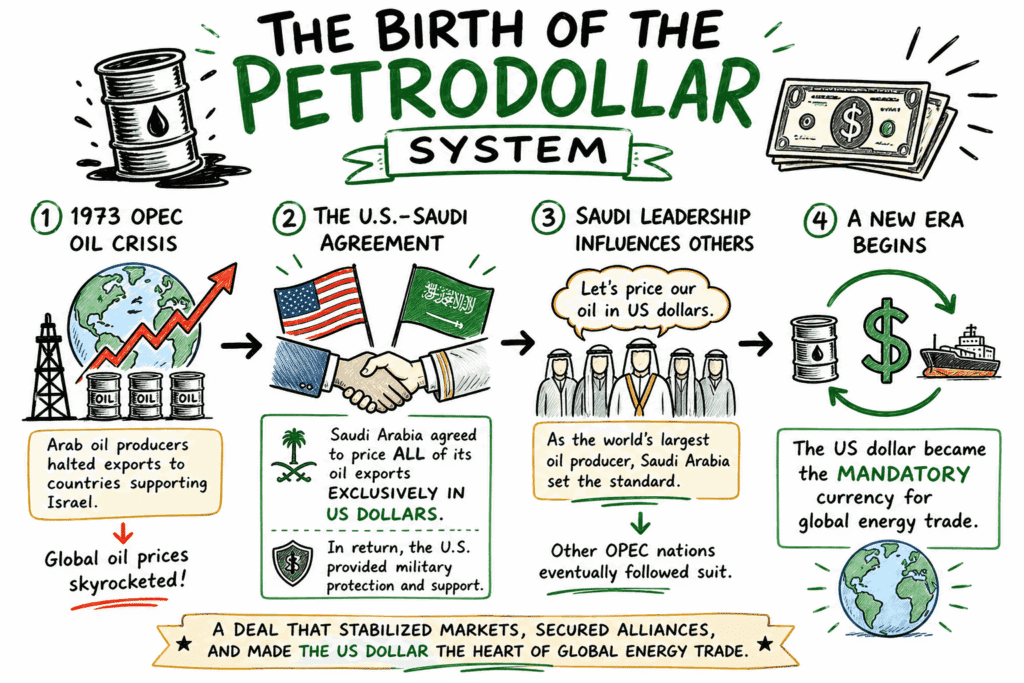
A key turning point came during the 1973 OPEC Oil Crisis.
Arab oil producers stopped exports to certain countries. This caused global oil prices to rise sharply.
To stabilize the situation, the US made a deal with Saudi Arabia. Saudi Arabia agreed to sell oil only in US dollars.
In return, the US provided military protection and support.
As the largest oil producer, Saudi Arabia influenced other OPEC nations. They also adopted dollar-based oil pricing.
This decision made the US dollar essential for global energy trade.
How the Petrodollar System Works
The Petrodollar system operates through a self-reinforcing cycle.
Universal Demand for Dollars
Every country needs oil to function. Oil purchases must be made in US dollars.
This forces nations to maintain large dollar reserves.
Economic Benefits for the US
Constant demand strengthens the US dollar. It also lowers borrowing costs for the US government.
The system gives the US strong financial influence worldwide.
Petrodollar Recycling
Oil-exporting nations reinvest their dollar earnings. They invest in US bonds, real estate, and stocks.
This process returns money to the US financial system. It further strengthens the economy.
The Future of the Petrodollar
Some countries are exploring alternatives to the dollar. Nations like Russia, Venezuela, India, and Pakistan have tested other currencies.
These include the Euro and the Chinese Yuan.
Barriers to Change
The US dollar offers unmatched liquidity and stability. It also provides strong legal protections.
Global trade systems are built around the dollar. Changing them requires major adjustments.
Gradual De-dollarization
Countries like China and Russia are adopting a gradual approach. They use local currencies in specific situations.
However, they still rely on the dollar for efficiency.
Emerging Challenges
Initiatives like the BRICS Trade Alliance challenge the system. China also uses gold strategies to strengthen its position.
Despite these efforts, the dollar remains dominant.
The Petrodollar system remains a powerful force in global finance. It supports the dominance of the US dollar worldwide.
Although challenges are increasing, a complete shift is unlikely soon.
For now, the Petrodollar continues to shape global economic and political dynamics.