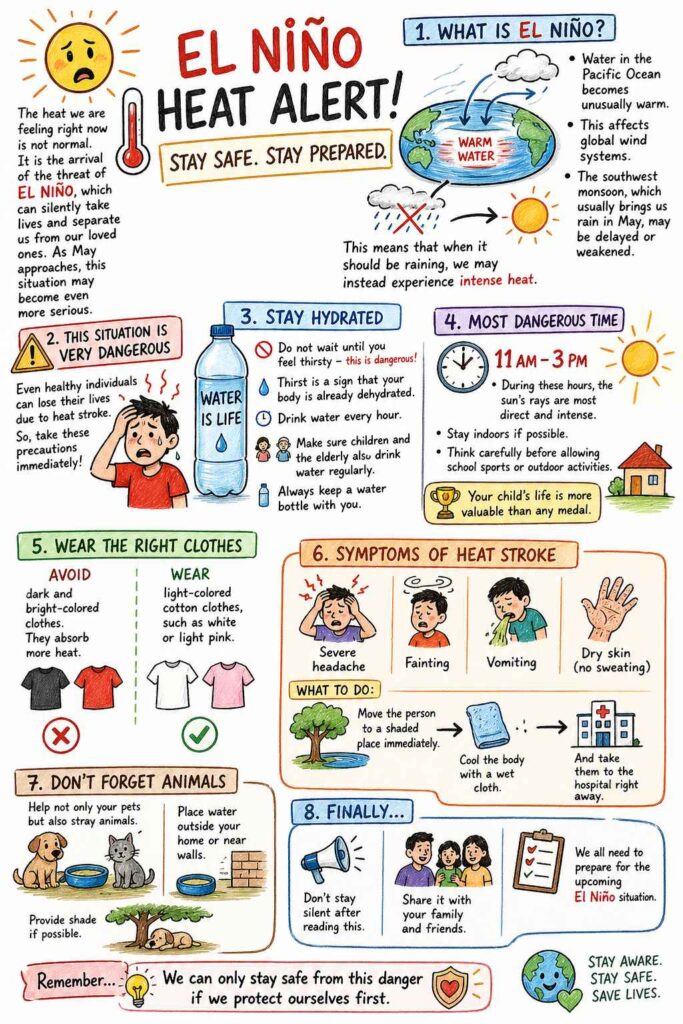

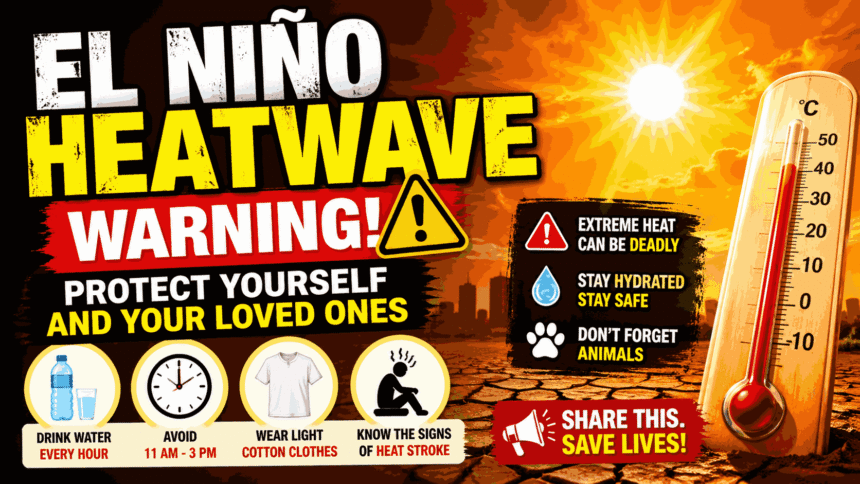
The rising temperatures we are experiencing now are not just ordinary heat. This unusual warmth signals the possible arrival of El Niño, a climate pattern that can have serious consequences. As May approaches, the situation may worsen and demand urgent attention.
What is El Niño?
El Niño occurs when the water in the Pacific Ocean becomes unusually warm. This warming disrupts global wind systems and weather patterns. One major impact is on the southwest monsoon.
The monsoon, which normally brings rainfall in May, may be delayed or weakened. This change means that instead of cooling rains, we may face intense heat. Such conditions can increase the risk of droughts and heat-related illnesses.
Why This Situation is Dangerous
This heatwave is not just uncomfortable; it can be life-threatening. Even healthy individuals can suffer from heat stroke. In extreme cases, it can lead to death if not treated quickly.
High temperatures affect children, elderly people, and outdoor workers the most. However, no one is completely safe during extreme heat. Therefore, taking preventive measures is essential.
Stay Hydrated at All Times
Do not wait until you feel thirsty. Thirst is a sign that your body is already dehydrated.
Drink water every hour, even if you feel fine. Always carry a water bottle when leaving home. Ensure that children and elderly family members drink water regularly.
Avoid sugary and caffeinated drinks, as they can increase dehydration. Fresh water remains the best option to maintain body temperature.
Avoid Peak Heat Hours
The most dangerous time of the day is between 11 AM and 3 PM. During these hours, the sun’s rays are strongest and most direct.
Stay indoors whenever possible during this period. Limit outdoor activities and avoid unnecessary travel. Schools and parents should think carefully before allowing sports activities.
A child’s safety is always more important than any competition or achievement.
Choose the Right Clothing
Clothing plays an important role in protecting your body from heat. Avoid wearing dark or bright-colored clothes, as they absorb more heat.
Instead, wear light-colored cotton clothes such as white or light pink. These colors reflect sunlight and help keep your body cool. Loose-fitting clothes also improve air circulation and reduce discomfort.
Recognize Heat Stroke Symptoms
Heat stroke is a serious medical emergency. Early recognition can save lives. Watch for the following symptoms:
- Severe headache
- Fainting or dizziness
- Vomiting
- Dry skin without sweating
If someone shows these signs, act immediately. Move the person to a shaded or cool place. Use a wet cloth to cool their body. Seek medical help without delay.
Protect Animals During Heat
Extreme heat affects animals as well. Pets and stray animals suffer silently during hot weather.
Place water outside your home or near walls for animals. Provide shade wherever possible. Small efforts can save lives and reduce suffering.
Spread Awareness and Stay Prepared
Do not ignore this warning. Share this information with your family, friends, and community. Awareness is the first step toward prevention.
Preparing early can reduce risks and save lives. Simple actions like drinking water, avoiding heat, and recognizing symptoms can make a big difference.
The threat of El Niño is real and can become severe in the coming weeks. Rising temperatures and delayed rainfall create dangerous conditions.
We must act responsibly and protect ourselves and others. Staying informed and taking precautions will help us face this challenge safely.
Remember, safety begins with awareness and action.