
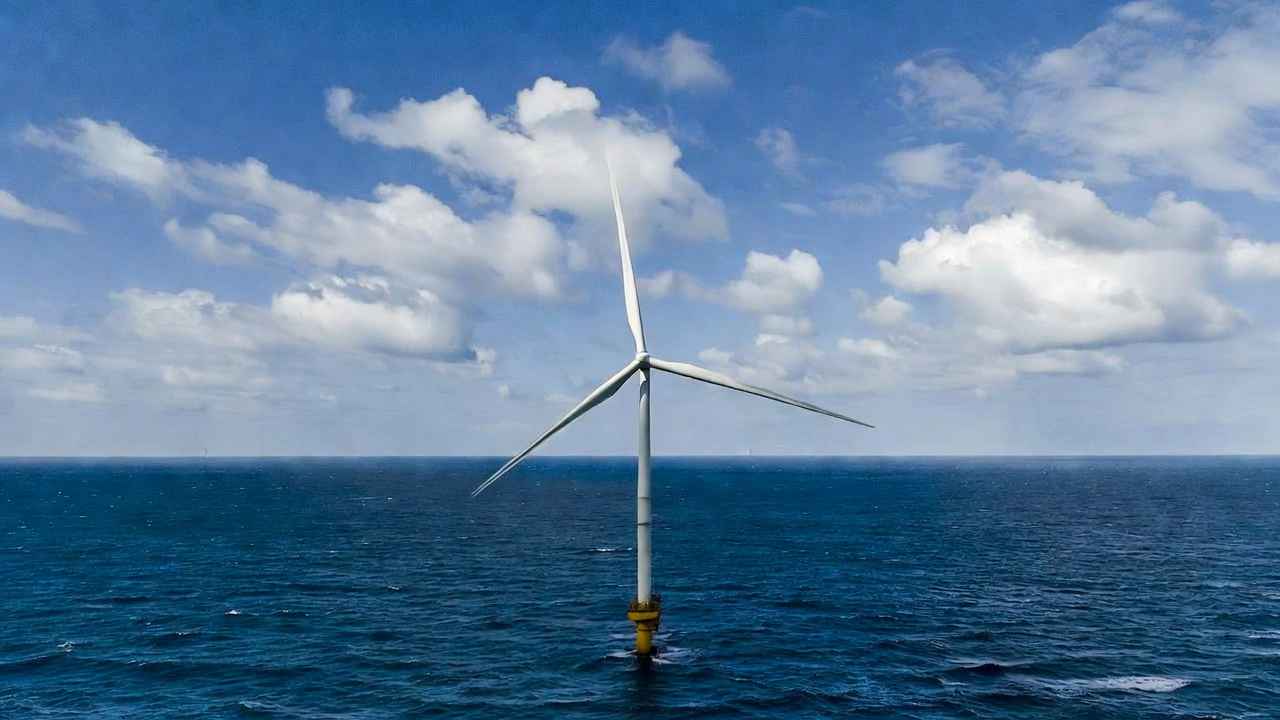

China has installed the world’s first 20-megawatt offshore wind turbine, setting a new global benchmark.
The project shows how large-scale wind power can support modern electricity demand efficiently.
Project Overview
China Three Gorges Co. led the installation of the 20-megawatt offshore wind turbine in coastal waters.
The company ranks among the world’s largest energy producers by capacity.
Engineers placed the turbine in waters off Fujian Province in southeast China.
This location supports strong and consistent offshore wind conditions.
Engineering Challenges at Sea
Teams installed the 20-megawatt offshore wind turbine more than 30 kilometers from the coastline.
They worked in deep waters with frequent weather shifts during monsoon seasons.
Crews also faced risks linked to extreme working heights offshore.
The operation demanded careful planning, precision timing, and strict safety controls.
Advanced Installation Technology
Workers used a next-generation installation vessel capable of lifting 2,000 tonnes.
The vessel allowed stable positioning despite strong sea conditions.
Crews lifted three blades, each nearly 150 meters long, with advanced control systems.
They mounted the blades at a height of 174 meters above sea level.
The team aligned each blade precisely with the central hub.
The process marked a remarkable achievement in maritime construction.
Design and Cost Efficiency
The turbine serves as a flagship project for national energy development goals.
China designed and manufactured all major components domestically.
The 20-megawatt offshore wind turbine weighs over 20 percent less per megawatt than industry averages.
This lighter design allows installation on more affordable underwater foundations.
Lower foundation costs help improve overall project economics.
Power Generation Capacity
Once connected, the 20-megawatt offshore wind turbine generates over 80 million kilowatt-hours annually.
This output can supply electricity to about 44,000 homes each year.
The turbine provides stable power without fuel supply constraints.
Environmental Impact
A single turbine can replace around 24,000 tonnes of coal every year.
It can also prevent about 64,000 tonnes of carbon dioxide emissions annually.
These reductions support long-term climate and air quality objectives.
The project represents a historic step for offshore renewable energy deployment.