
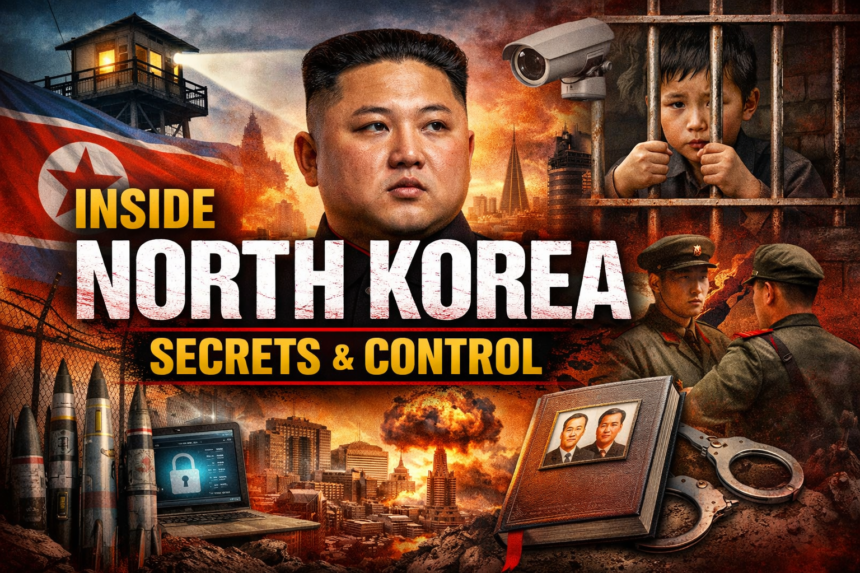
North Korea is known for its strict laws and extreme control over citizens. Many rules are difficult to believe, yet they shape daily life in the country. This article explores North Korea’s system, history, and unique restrictions.
- A Nation Shaped by History
- The Kim Dynasty and Absolute Power
- Strict Laws and Daily Restrictions
- Control Over Information and Communication
- Cultural Restrictions and Bans
- Travel and Movement Restrictions
- State Ownership and Religious Ban
- Collective Punishment System
- Surveillance and Self-Criticism
- The Songbun Social System
- Military Service and Daily Obligations
- Education and Ideological Training
- Unique Calendar System
- Isolation from the World
A Nation Shaped by History
North Korea’s story begins with colonial rule and global conflict. Until 1945, Japan controlled Korea for 35 years. After World War II, Korea was divided into two regions. The North came under Soviet influence, while the South aligned with the United States. In 1948, Kim Il-sung became the leader, and the country was named the Democratic People’s Republic of Korea. Despite the name, true democracy never developed. In 1950, the Korean War began between North and South Korea. The war ended without a peace treaty, so both nations remain technically at war today.
The Kim Dynasty and Absolute Power
North Korea has always been ruled by one family. Leadership passed from Kim Il-sung to Kim Jong-il and now to Kim Jong-un. Each ruler strengthened control through strict laws and harsh punishments. Fear plays a major role in maintaining authority. The government also limits foreign influence to protect its system.
Strict Laws and Daily Restrictions
Life in North Korea follows strict rules and regulations. Elections exist, but only one candidate is allowed, and voting is mandatory for all citizens. Refusing to vote can lead to punishment. Media is also tightly controlled, as only one television channel is available and citizens cannot change it. All content is managed by the state to promote loyalty and shape public opinion.
Control Over Information and Communication
Access to information is strictly limited in North Korea. Citizens cannot use the global internet and instead rely on a closed national network. The government monitors all online activity to control what people see and read. Calling foreign countries without permission is illegal, and private media does not exist.
Cultural Restrictions and Bans
The government enforces strict cultural rules to limit outside influence. Watching foreign films or dramas can result in severe punishment. Western clothing like jeans, bright fashion, and dyed hair are banned. In 2024, sunglasses and certain wedding dresses were also restricted. Even food choices are controlled, as American and South Korean dishes are not allowed.
Travel and Movement Restrictions
Movement within North Korea is heavily restricted. Citizens need permits to travel between cities, and passports are rarely given to ordinary people. Only elite officials can travel abroad. Tourists must follow strict rules, as they cannot move freely or interact openly with locals.
State Ownership and Religious Ban
The state owns all property in North Korea, including houses, land, and businesses. Citizens can only use these resources with government permission. Religion is officially banned, and practicing any faith can lead to punishment. Churches exist mainly to show outsiders a false image of religious freedom.
Collective Punishment System
Punishment in North Korea often affects entire families. If one person is accused of disloyalty, up to three generations of their family can face consequences. Even children can be labeled traitors because of their family background.
Surveillance and Self-Criticism
The government closely monitors citizens through informants placed in communities. People are encouraged to report suspicious behavior. Weekly self-criticism sessions are mandatory, where individuals must confess mistakes publicly and accept criticism from others.
The Songbun Social System
North Korea uses a classification system called Songbun, which determines a person’s future at birth. The system is based on family history and loyalty to the regime. The core class receives the best opportunities, while the wavering class represents average citizens, and the hostile class faces discrimination and limited access to jobs and resources.
Military Service and Daily Obligations
Military service is mandatory for all citizens and usually lasts around ten years. Both men and women are required to serve. Emotional expression is also controlled, as mourning national leaders is compulsory. Every home must display portraits of leaders, and these must be kept clean at all times.
Education and Ideological Training
Education in North Korea focuses heavily on loyalty and ideology. Students must memorize speeches of national leaders and repeat them accurately. Even small mistakes can lead to punishment. Citizens are also required to learn ideological principles by heart.
Unique Calendar System
North Korea uses the Juche calendar, which begins in 1912, the birth year of Kim Il-sung. This means that the year 2025 is counted as year 113 in the country.
Isolation from the World
North Korea remains one of the most isolated countries in the world. The government restricts media, travel, and communication to prevent exposure to outside ideas. International sanctions, mainly due to its nuclear program, have increased this isolation even further.
North Korea operates under one of the strictest systems in the world, where the government controls nearly every aspect of life. From birth to death, citizens must follow strict rules and show loyalty to the regime. Much of the available information comes from defectors and external sources, so the full reality inside the country remains largely hidden.